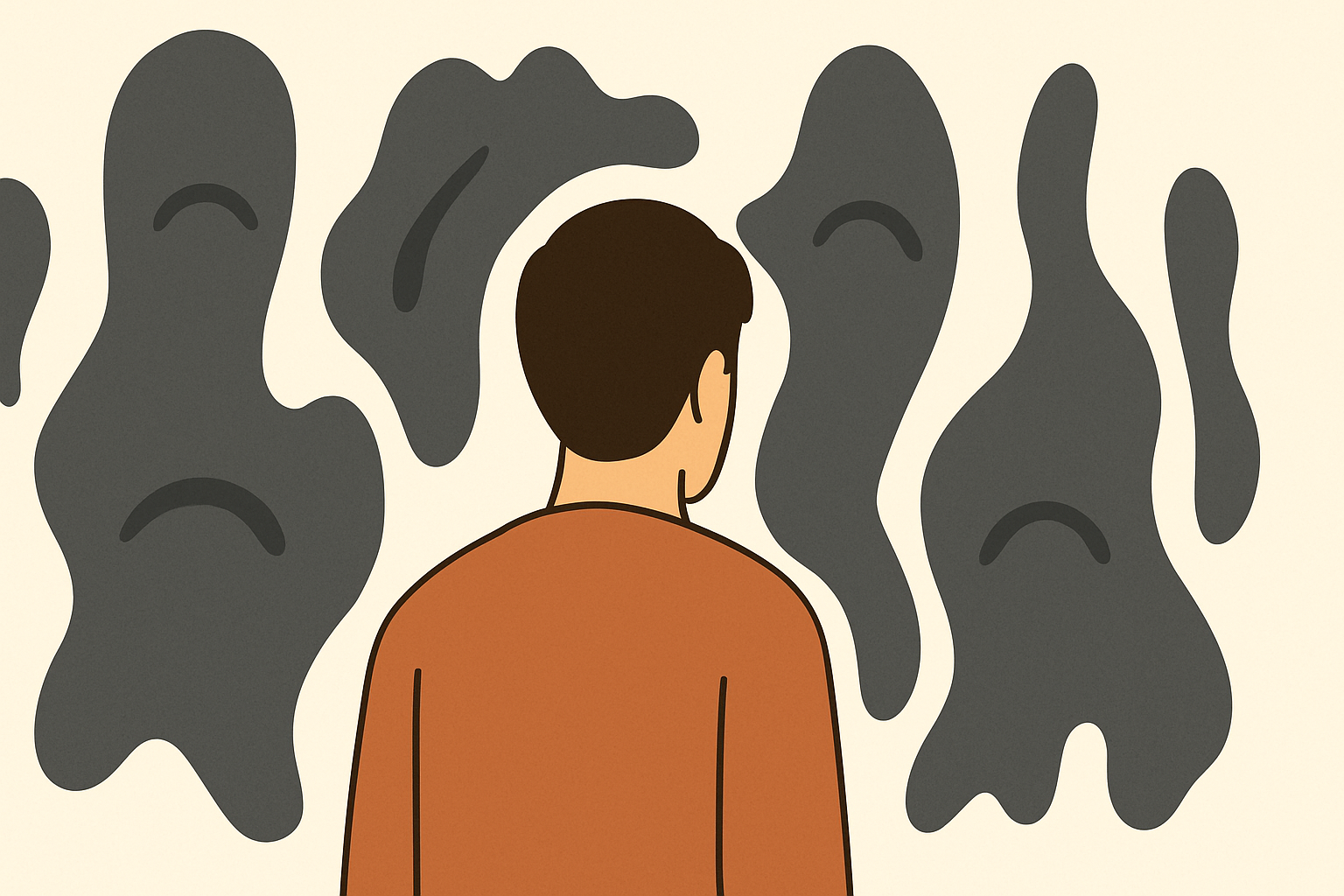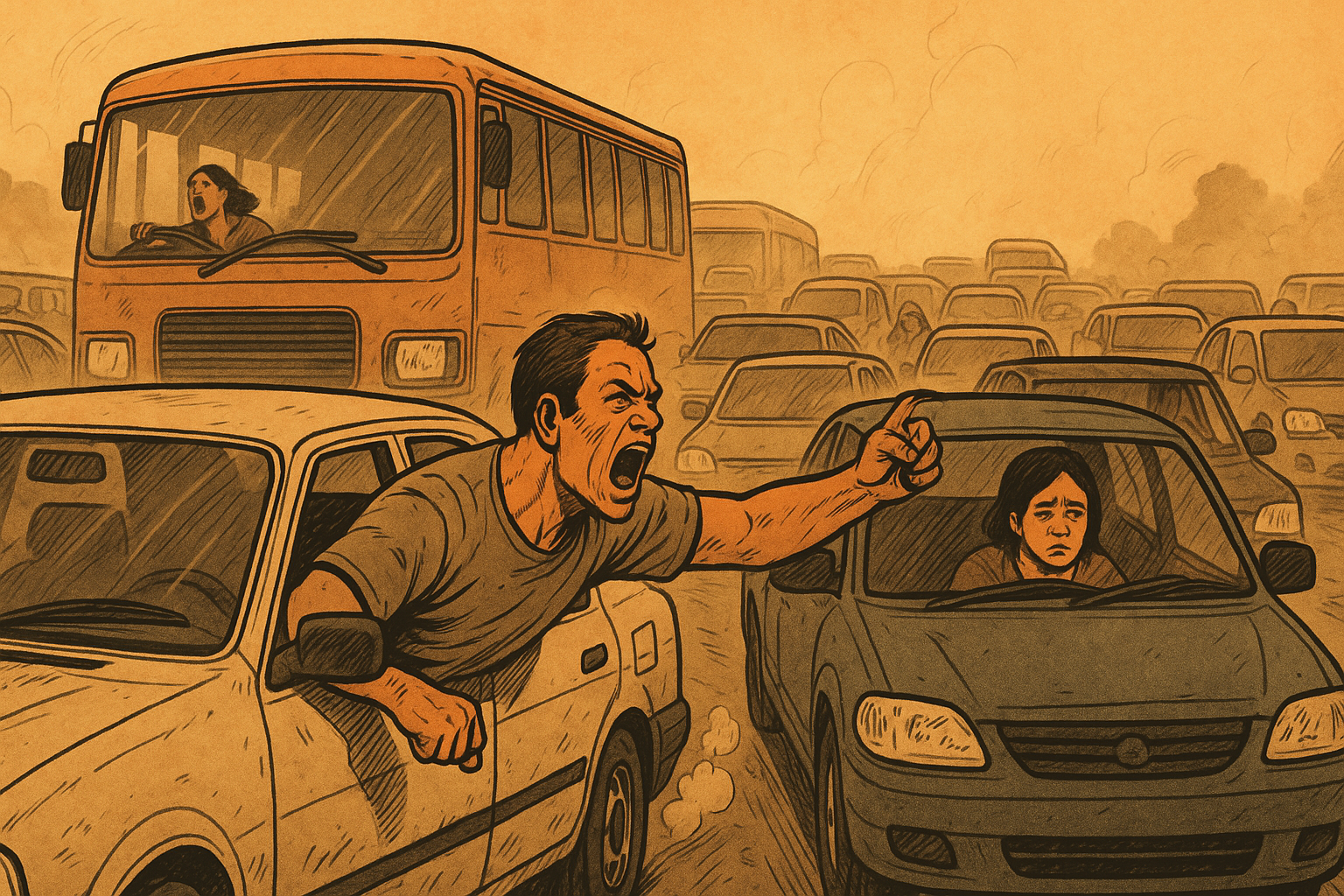
The road by the river—usually a quiet escape from the city’s chaos—had turned against its own legend. That day, it pulsed with a chaos of its own. Vehicles lay stranded in a suffocating snarl that stretched nearly half a mile, engines growling in idle protest. Horns blared. Tempers frayed. Drivers leaned out of windows, shouting curses into thick, unmoving air, while others sat slumped in silence, sweat beading on their brows, trapped not just in traffic, but in the weight of yet another unbearable day.
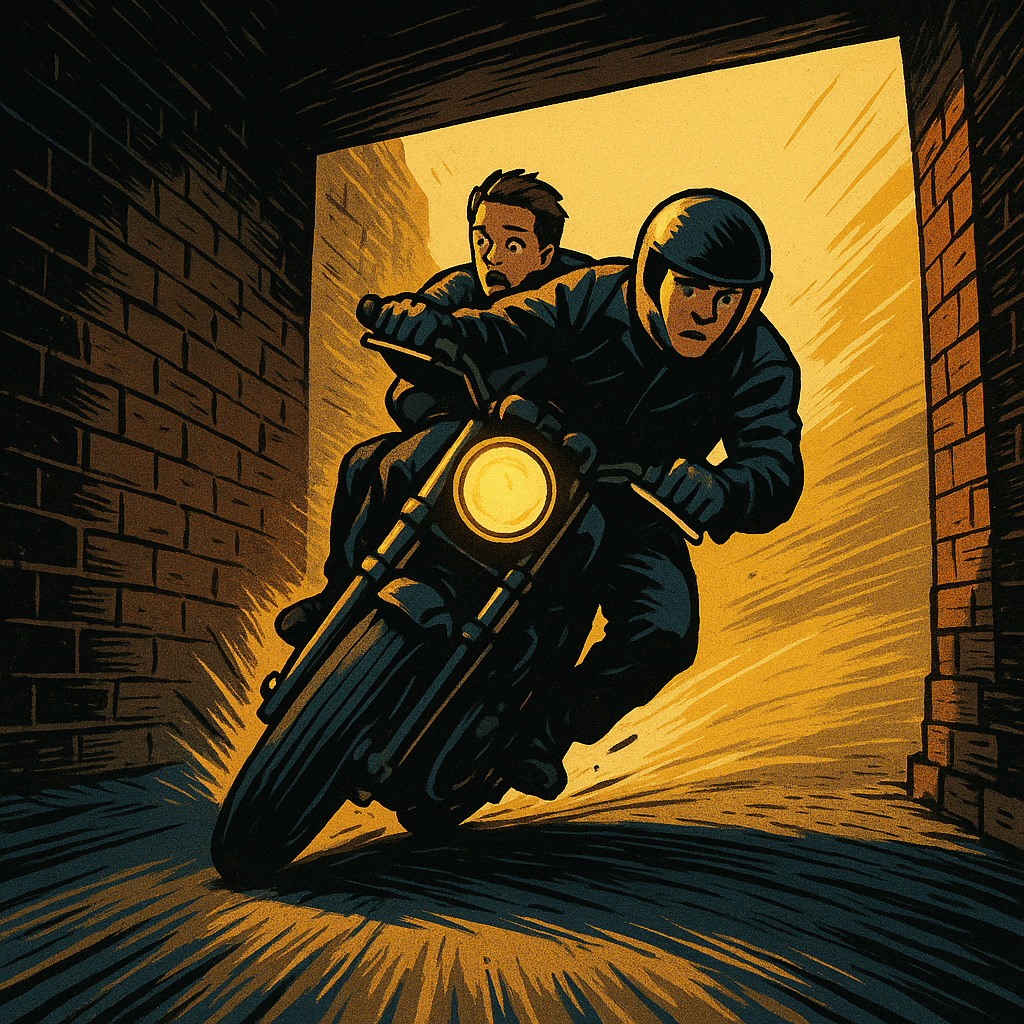
Emerging from a shadowed alley a mile away, a motorcycle burst onto the road, leaning hard into a left curve. As the motorcycle straightened, the rider deftly shifted gears, shooting forward with renewed speed. The sudden acceleration caught the pillion rider off guard.
“Ease up, man!” the pillion called out, voice tinged with alarm. “We’re not that late.”
But encased in a semi-soundproof helmet and propelled by the heady rush of wind against him, the rider wasn’t inclined to entertain his friend’s plea. He maintained his momentum, unfazed.
“Look out! There’s a jam up ahead!” the pillion warned, louder this time.
“I see it.”
Without missing a beat, the rider swerved into the opposing lane, now eerily vacant. But after a few exhilarating moments of speed, reality struck — the road ahead was choked with vehicles and pedestrians, all struggling to find their way.
“We should turn back,” the pillion suggested as the bike came to a grinding halt.
The rider, resolute, replied, “No chance. We wait. Every road’s a mess at this hour.” With a sigh, he killed the engine and removed his helmet.
Dawa, the pillion rider, gingerly rose onto the rear footrest for a clearer view ahead. “We won’t make it in time,” he remarked, exhaling deeply after processing the scene before him. “The crane’s taken up the entire road, right to the river’s edge. The other end is equally clogged with vehicles. And look at the police presence. Something serious must have happened.”
Sirish, seeking understanding, flagged down a man who seemed to be navigating away from the crowd. “Do you know what’s happening?”
“A body, they’re pulling someone out of the river,” the pedestrian shared hurriedly before continuing on his way, eager to escape the mounting chaos.
The river, more a receptacle for the valley’s waste than a water body, moved sluggishly. Over the years, it had turned into a vast, slow-moving quagmire. Its stench, a mix of decay and sewage, permeated the air for miles around—a scent so omnipresent that locals had begrudgingly adapted to it.
Vehicles quickly amassed behind the motorcycle, effectively trapping it in place. With the urgency of their errand weighing on them, Sirish and Dawa found themselves tethered to patience, waiting for the grim task ahead to conclude and the road to clear. Sirish set the bike on its stand and gestured for Dawa to dismount. The smaller of the two, Dawa, complied and asked, “Now what, Sirish?”
“Do you want to take a closer look?” Sirish proposed, swinging his leg off the bike.
Rushing to the court that day was more than a mere formality for the duo; it was a culmination of events following an unexpected incident that had spiraled their lives out of control. An impulsive act, born of Dawa’s frustration, had thrust him into a tumultuous period. Throughout it all, Sirish, ever the loyal friend, stood by his side.
“Look, we shouldn’t panic,” Sirish murmured, trying to catch a glimpse through the throng assembled by the riverbank. “Nobody’s ever on time here.”
Dawa nodded, “Just a signature, right?”
Navigating their way through the sea of onlookers, the duo managed to position themselves at the forefront, barely an arm’s length from the police tape. Their view was now unobstructed, revealing a grim tableau—the drama of life and death unfolding under the scrutinizing gaze of countless onlookers, many of whom had phones raised, capturing the event.
“Looks like he’s got the body,” a voice exclaimed, directing all eyes to the center of action.
The rescuer, having reached the submerged figure, swiftly tethered a rescue rope around it, attaching the crane’s hook securely. A hand gesture signaled the crane operator to begin the extraction.
The body, clearly a woman, emerged from the murky depths, her attire stained with the grime of the river. The crane paused, laying her on the bank for all to see.
Dawa murmured, “Hope she finds peace. But… doesn’t she look kind of familiar?”
Sirish gave Dawa a playful nudge. “You and your sensitive heart,” he teased. “To you, everyone’s got a familiar face!” Pulling his friend gently by the arm, he urged, “We should move. That ambulance looks set to go, and the road will clear up soon.”
But today was about more than just traffic jams and tragic accidents for Dawa. In the not-so-distant past, a grave error on his part had sent shockwaves through the nation’s political landscape. His life had irrevocably shifted off its predictable axis.